Find Cute 2600mah Power Bank for Phones, Travel, and Gifts
Browse 30 listings for a cute 2600mah power bank suited to phones, travel, and promotional gifting. Compare capacity, cell type, charging interfaces, LED lighting, displays, certifications such as CE and RoHS, and pricing across suppliers, then shortlist options that match your order requirements.
Key considerations
Products List




Comprehensive Sourcing Guide
Cute 2600mah Power Bank Sourcing Guide
Sourcing compact, aesthetically pleasing power banks with a capacity around 2600mAh requires a nuanced understanding of the trade-offs between portability, battery chemistry, and regulatory compliance. In the current B2B landscape, "cute" designs often target specific demographics such as students, fashion-conscious consumers, or corporate gift buyers who prioritize form factor alongside functionality. However, the term "cute" is subjective and lacks technical definition, meaning buyers must rely on visual samples and detailed product photography to ensure the aesthetic aligns with their brand identity. The capacity of 2600mAh places these devices in the ultra-compact category, suitable for emergency top-ups rather than full device charges, which necessitates clear communication with end-users about realistic usage expectations.
The procurement process for these items is heavily influenced by the underlying battery technology and the associated safety certifications. While the observed market data indicates a wide range of capacities from under 2000mAh to over 12000mAh, and various cell types including 18650 Lithium-ion and Li-Polymer, buyers must verify that the specific 2600mAh units they select meet their safety and performance criteria. The presence of certifications such as CE, RoHS, CB, TUV, and KC in the broader market suggests that compliant suppliers exist, but these are not universal across all listings. Buyers must treat certification status as a variable to be verified per supplier rather than an inherent attribute of the product category, ensuring that the specific "cute" models ordered have undergone the necessary testing for their target export markets.
Product Scope and Observed Listing Signals
The observed product listings reveal a diverse array of power bank configurations, highlighting the importance of distinguishing between marketing claims and technical realities. Listings indicate capacities ranging from ≤2000mAh to 8001-12000mAh, with specific models like the DX245 and YM-740 appearing in the data. For a buyer seeking a 2600mAh unit, it is critical to cross-reference the listed capacity with the actual cell type, as some listings may advertise higher nominal capacities while using lower-quality cells or different measurement standards. The presence of features such as LED lighting, digital displays, and various output interfaces like Type-C and Micro USB adds complexity to the sourcing process, requiring buyers to specify exactly which features are essential for their "cute" design requirements.
Visual and physical attributes also play a significant role in defining the product scope. The data shows variations in carrying ways, including clip-style and universal split designs, as well as material compositions like ABS and PVC. These materials impact both the durability and the tactile feel of the device, which is crucial for products marketed on aesthetic appeal. Additionally, the availability of customization options suggests that buyers can tailor colors, such as black, purple, white, and blue, to match their brand guidelines. However, buyers must be cautious of listings that claim "fast charging" or "quick charge" capabilities, as these terms often imply higher wattage outputs that may not be consistent with the lower capacity and smaller form factor of a 2600mAh device.
Technical Specifications to Verify
When evaluating technical specifications for a 2600mAh power bank, buyers must prioritize the battery cell type and its associated performance characteristics. The market data indicates the use of both 18650 Lithium-ion and Li-Polymer cells, each with distinct advantages and disadvantages. Li-Polymer cells are generally preferred for slim, lightweight, and aesthetically pleasing designs due to their flexibility in shape and lower weight, whereas 18650 cells may offer higher energy density but at the cost of increased bulk. Buyers should verify the specific cell type for each supplier to ensure it aligns with the desired form factor and performance profile, as mixing these up can lead to significant discrepancies in product size and weight.
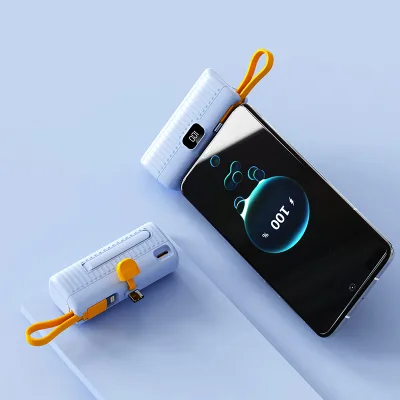
Output power and interface compatibility are equally critical technical factors that determine the utility of the power bank. The observed data includes output powers of 10W and 18.5W, along with output interfaces such as Type-C. Buyers must confirm that the power bank’s output voltage and current are compatible with their target devices, particularly if the devices are iPhones or other smartphones that may have specific charging requirements. Additionally, the presence of input interfaces like Type-C and Micro USB affects the convenience of recharging the power bank itself. Buyers should also verify whether the device includes a built-in cable, as this feature can enhance portability but may also introduce potential points of failure if the cable is not securely integrated or of high quality.
Compliance and Safety Documentation
Compliance with international safety and environmental standards is non-negotiable for importing power banks, given the inherent risks associated with lithium-ion and lithium-polymer batteries. The observed certifications include CE, RoHS, CB, TUV, and KC, which indicate varying levels of regulatory adherence depending on the target market. For instance, CE marking is essential for selling in the European Economic Area, while KC certification is required for South Korea. Buyers must request valid test reports and certificates from suppliers, ensuring that these documents are current and issued by recognized testing laboratories. Relying on generic claims of compliance without verifying the specific documentation can lead to customs delays, product seizures, or legal liabilities.
Waterproof standards and other environmental protections are also important considerations, particularly for power banks marketed as durable or outdoor-friendly. The data mentions an IPX-4 waterproof standard, which indicates protection against water splashes from any direction. Buyers should clarify whether this rating applies to the entire device or just specific components, as this distinction significantly impacts the product’s suitability for different use cases. Furthermore, buyers must ensure that the materials used, such as ABS and PVC, comply with RoHS restrictions on hazardous substances. This verification is crucial for maintaining brand reputation and avoiding regulatory penalties in markets with strict environmental regulations.
Cost Drivers and Commercial Terms
The cost of a 2600mAh power bank is influenced by several factors, including the battery cell quality, the complexity of the circuit board, and the aesthetic design elements. Listings show a wide price range from $1.47 to $308, reflecting the vast differences in quality, features, and brand positioning. Buyers should be wary of prices that seem too good to be true, as they may indicate the use of substandard cells or lack of proper safety certifications. The MOQ (Minimum Order Quantity) ranges from 1 to 2000 units, offering flexibility for both small-scale testers and large-volume buyers. Understanding the MOQ requirements is essential for budgeting and inventory planning, as higher volumes often result in lower per-unit costs but require greater upfront investment.
Commercial terms such as payment methods, shipping options, and after-sales service also impact the total cost of ownership. The data indicates that prices are often negotiable, and suppliers may offer various packing options, such as standard packing or bulk cartons with specific weights. Buyers should negotiate clear terms regarding warranty periods, with some suppliers offering 12 months of after-sales service. Additionally, the presence of customization options may incur additional costs, so buyers should clarify any fees for custom colors, logos, or packaging before finalizing orders. Clear communication of these terms helps avoid hidden costs and ensures a smooth procurement process.
Supplier Qualification and Quality Control
Supplier qualification is a critical step in ensuring the reliability and consistency of the power bank supply chain. Buyers should conduct thorough due diligence on potential suppliers, verifying their business licenses, manufacturing capabilities, and quality control processes. The observed data suggests that many suppliers are based in China, a major hub for electronics manufacturing. Buyers should assess the supplier’s experience in producing power banks, their production capacity, and their ability to meet specific customization requests. Requesting samples before placing large orders is essential to evaluate the product’s build quality, aesthetic appeal, and functional performance.
Quality control measures should be established to monitor production consistency and identify potential defects early in the manufacturing process. Buyers should implement incoming quality control (IQC) checks to verify the specifications of received components, such as battery cells and circuit boards. In-process quality control (IPQC) should be conducted during assembly to ensure that soldering, casing, and testing procedures are performed correctly. Final quality control (FQC) inspections should be carried out before shipment to verify that the finished products meet all agreed-upon standards, including capacity, output power, and cosmetic appearance. Establishing a robust quality control framework helps minimize the risk of receiving defective products and protects the buyer’s brand reputation.
Long-Term Procurement Checks
Long-term procurement success depends on continuous monitoring of supplier performance and market trends. Buyers should regularly review supplier metrics, such as on-time delivery rates, product defect rates, and responsiveness to issues. Establishing a scorecard system can help objectively evaluate suppliers and identify areas for improvement. Additionally, buyers should stay informed about changes in regulatory requirements, such as updates to CE or RoHS standards, to ensure ongoing compliance. Proactive engagement with suppliers regarding new technologies or materials can also help buyers stay competitive and offer innovative products to their customers.
Building a resilient supply chain involves diversifying suppliers and maintaining open communication channels. Relying on a single supplier can pose significant risks, such as production delays or quality inconsistencies. By cultivating relationships with multiple qualified suppliers, buyers can mitigate these risks and ensure continuity of supply. Regularly revisiting commercial terms and negotiating favorable conditions based on volume and performance can also enhance profitability. Finally, gathering feedback from end-users and analyzing market trends can provide valuable insights for future product development and sourcing decisions, ensuring that the procurement strategy remains aligned with customer needs and market demands.
FAQs
How does a cute 2600mah power bank charge a mobile phone?
It charges a phone through its output interface, connecting with the phone's charging cable or a built-in cable on some models. A 2600mAh capacity typically provides about one partial to full charge for most smartphones. Output power varies by model, with listed options including 10W output through Type C. Charging efficiency and cable quality affect actual charging speed.
What input interfaces are available for charging the power bank itself?
Listed models commonly support Type-C and Micro USB input interfaces, so you can recharge the power bank with either cable type. This flexibility lets buyers use widely available cables. Input source is electric charging from a wall adapter or USB port. Recharging time depends on the adapter output and the specific model's input rating.
Which cell types are used in these power banks?
Listed products use either 18650 lithium-ion cells or lithium-polymer batteries, depending on the model. Lithium-polymer designs are often slimmer and lighter, while 18650 cells are a common cylindrical format. In both cases the battery is not removable by the user. Buyers should confirm the cell type with the supplier when requesting quotations for a specific model.
Can I customize the color and design of a cute power bank?
Yes, customization is available on listed products. Color options observed include black, purple, white, blue, and pink, so buyers can align units with their brand or market preference. Customization typically covers color and appearance, and minimum order quantities vary by listing, ranging from single units to thousands. Confirm customization scope, artwork requirements, and MOQ directly with the supplier before ordering.
What certifications do these power banks carry?
Listed products show certifications including CE, RoHS, and for some models CB, TUV, and KC. Certification coverage differs by model, so buyers should verify which certificates apply to the exact item they intend to purchase. Certificates matter for customs clearance and retail compliance in many markets. Request certificate copies from suppliers during the sourcing process.
How can I tell how much charge is left in the power bank?
Some listed models include a digital display that shows the remaining charge, while others come without a display. Models with a display make it easier to check battery status at a glance. If a display is important for your product, filter for digital display power bank listings and confirm the display type with the supplier. Basic models may rely on indicator lights instead.
What packaging can buyers expect when ordering in bulk?
Listed products use standard packing, with one observed configuration of 100 pieces per carton weighing 57.3 pounds. Selling units are typically single items. Buyers ordering in bulk should confirm carton dimensions, units per carton, and total shipping weight with the supplier, since packaging details affect freight cost and warehouse handling. Custom retail packaging may be available through customization.
What after-sale service is offered on these power banks?
Some listed models include a 12-month after-sale service period. Coverage terms can vary by supplier and product, so buyers should confirm what the warranty covers, such as manufacturing defects, and how claims are handled before placing an order. Buyers sourcing for resale should also clarify whether the service applies to end users or only to the trade buyer.